A DESKTOP COMPANION, NOT A SHORTCUT
A desktop wallet app can make self-custody easier to follow. The key is knowing what the screen does—and what it cannot. This guide walks through a measured setup, from preparation to everyday account checks.
One distinction to keep: the app provides an interface for managing accounts; a compatible hardware device is used to approve supported actions. Your recovery phrase should remain private and offline.
01 — START HERE
The Desktop Starting Point
Ledger Live Desktop is an application for viewing and managing supported accounts from a computer. Depending on your region and assets, it can show balances, transaction history, and portfolio activity. It is a window onto account information, not a replacement for the hardware device that safeguards access.
For a first session, use a computer you control and approach setup as account administration, not a race to transact. Explore the interface before taking action that needs device approval.
“The calmest setup is the one where every prompt makes sense before you act.”FIELDNOTE 01 / BEGIN WITH CLARITY
02 — BEFORE INSTALLING
What to Prepare
Use a computer you control, a stable connection, and your compatible hardware wallet. Know your device PIN, but do not leave it exposed. Existing accounts depend on the device’s recovery phrase—not a password stored in the desktop app.
Get the application only from a source you have verified as Ledger’s official website. Avoid sponsored links and unsolicited helpers. Setup should never require you to type your recovery phrase into an app or share it with anyone.
Have ready a trusted computer, your hardware wallet, its PIN, and enough uninterrupted time to read each screen. Keep private your recovery phrase, which should never be shared or entered on a computer.
03 — ORIENTATION
Understanding the Setup Flow
Screens change, but the broad sequence is simple: obtain and install the app, open it, then follow prompts to connect or configure a device. Read each choice: a new-device flow and a restoration flow are different.
Setup may check that the software and device are genuine, then guide you through adding accounts. Pause at unexpected warnings and verify through Ledger’s help materials, reached independently. Urgency is not a reason to skip checks.
04 — DEVICE
Connecting Your Device
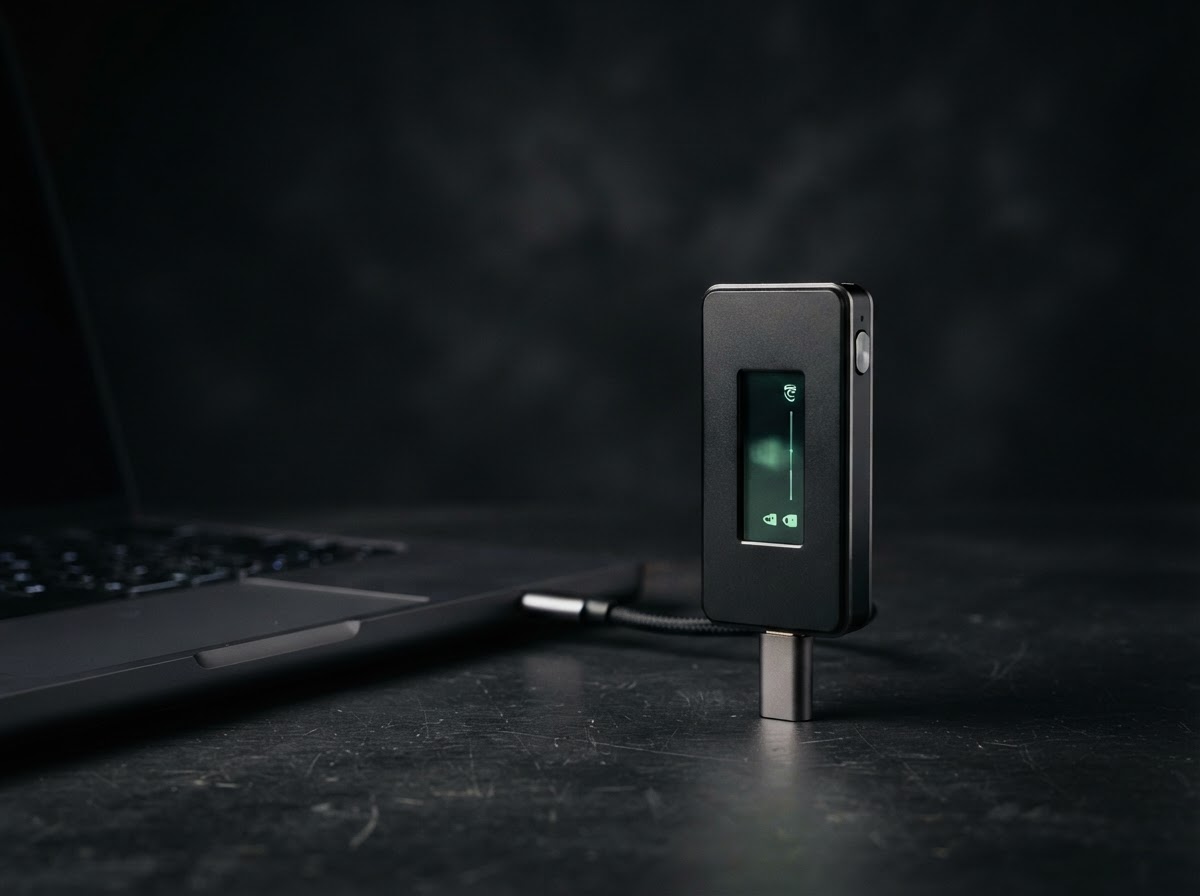
Connect using a method supported by your model and unlock the wallet on the device. Follow desktop prompts, but independently review transaction details on the hardware wallet before approval. If details differ from your intent, reject the action.
Connection issues may come from a charge-only cable, port, outdated system, or another app. Try a data cable and direct port, close unrelated wallet software, then restart. Never share your PIN or phrase to troubleshoot.
05 — THE INTERFACE
Exploring the Workspace
The workspace brings together related views: a portfolio overview, individual account balances and transaction records, plus settings and service areas. Names and features vary by app version, asset, and region.
Start by finding the account list, opening a transaction record, and locating software and device information. Portfolio values can move with markets or currency settings; a changing display is not a transaction or a promise of future value.
A balance view is for reviewing account information. A transaction requires careful review and explicit approval on the hardware device.
06 — ORGANIZATION
Managing Accounts
Accounts organize supported assets and activity. Add what you need, use clear names where possible, and review transaction history. Labels help navigation; they do not change device or network security.
Before receiving assets, confirm the asset and network match the sender’s. Compare the full address in the app with the one on your device, not just a few familiar characters. For a new route, check current guidance; network transactions may be irreversible.
07 — PRINCIPLES
Security as a Daily Habit
Self-custody depends on habits away from the screen too. Keep your recovery phrase offline and secure; never photograph, email, cloud-store, or enter it online. Anyone who obtains it may control associated assets, and support staff should not need it.
Check the device screen before approving: confirm destination, amount, and network details. Be wary of remote-access requests, unsolicited support, and imitation links. If something feels unusual, stop and navigate to support documentation yourself.
“Verification is not a one-time setup step. It is part of every meaningful approval.”FIELDNOTE 02 / READ THE DEVICE
08 — KEEP CURRENT
Updates and Maintenance
Updates can improve compatibility or change the interface. Read release information and follow current Ledger support instructions. Keep your computer maintained and do not interrupt a device update unless documented guidance tells you to.
Allow time and use a reliable connection. Your recovery phrase should stay offline; an update should not ask you to disclose it. If prompted, stop and verify through an independently located support channel.
09 — COMMON MISSTEPS
Mistakes Worth Avoiding
Do not treat an ad or social post as proof an installer is genuine. A balance is not transaction approval: read details on the device. Take care with account and network selection; similar names can refer to different networks.
Never share sensitive information to solve a software problem. A legitimate helper needs neither your phrase nor PIN. When unsure, end the conversation and find instructions through a verified support site.
10 — QUICK REFERENCE
Questions Beginners Ask
Can I use the desktop app without a hardware wallet?
Some app information or features may be explorable without connecting a device, but device-dependent account management and approvals require compatible hardware. Check current product documentation for the exact functions available.
Does the desktop app store my recovery phrase?
Your recovery phrase is intended to remain private and offline. It should not be entered into the desktop app, a website, or a support chat. If an unexpected prompt asks for it, stop and verify through official help resources.
Why might a balance or account not appear?
Check that the intended account has been added, the application is online, and the relevant asset and network are supported. App versions and regional availability can affect what is shown; consult current troubleshooting guidance rather than repeating sensitive setup steps.
11 — IN CLOSING
Final Takeaway
A good first experience is deliberate: verify the software source, distinguish an account view from a device-approved action, and make security part of daily use. The interface helps you follow activity; careful verification remains yours.
Question each prompt. Keep recovery information private, confirm transaction details on the device, and consult verified documentation when something differs. Confidence comes from understanding the steps, not clicking quickly.